Chapter 09 · 1991–2025
Soft Power, Familiar Japan
Japan's post-bubble global image was not exported intact as a national essence. Cultural producers, hardware platforms, distributors, award institutions, fans, food businesses, tourists, and state agencies jointly made selected forms of Japan feel intimate—and preserved exotic distance through that selection.
Japan entered the 1990s after the collapse of its asset bubble, but the image of the economic rival did not simply vanish. Consoles moved into living rooms, animation circulated through broadcasters and festivals, sushi became a weekday purchase, fan conventions assembled participatory publics, and familiar views became travel itineraries. These encounters were more frequent and intimate than the rare books, maps, and exhibitions that opened this story. They were not more complete. Each medium still selected, translated, branded, and priced a version of Japan. By the 2010s, the Japanese government had begun to name that attraction “Cool Japan” and to treat it as a resource. The policy label followed a field already made by many actors who could not be commanded from Tokyo.
Evidence set6 objects · 1994–2019
Method noteMethod note: This chapter avoids reproducing copyrighted game screens or animation frames as decorative shorthand. Its six records are rights-cleared photographs of an object, people, commercial spaces, and tourism, plus a government strategy page. A photograph’s licence does not transfer rights in depicted trademarks, costumes, characters, or personalities. The sequence distinguishes cultural producers, firms, institutions, fans, tourists, local places, and the Japanese state rather than treating popularity as a single national export.
The evidence sequence
Console used, auteur honoured, convention inhabited, landmark crowded
Scroll through 4 surviving objects. The image changes as the argument advances from one frame to the next.
01 / Platform
A console makes Japan an interface
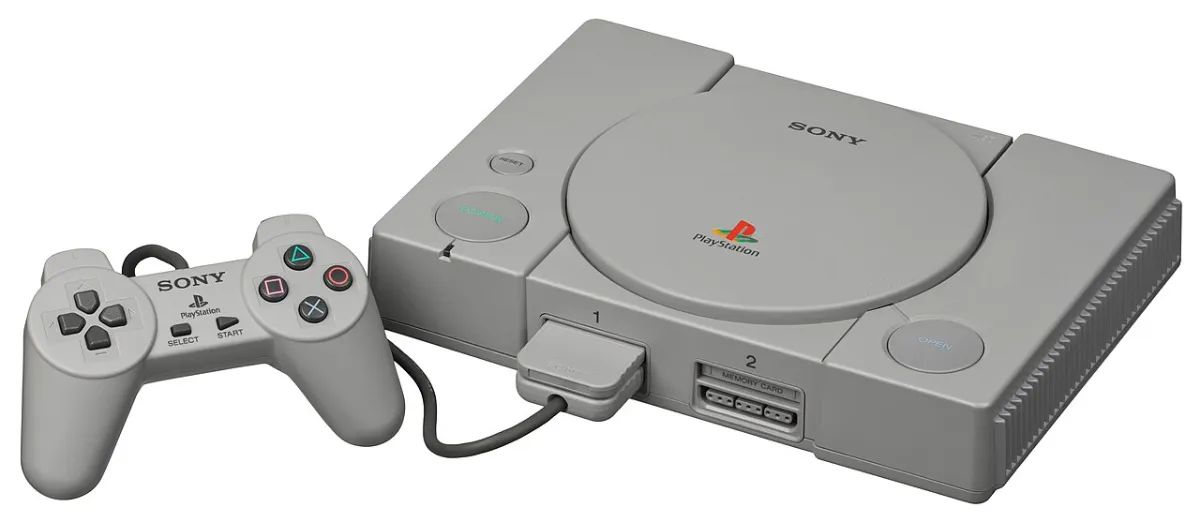
Sony released the first PlayStation in Japan on December 3, 1994. Evan-Amos’s later museum photograph shows the Japanese SCPH-1000 model with its controller and memory card. The object became one platform through which software, design conventions, and stories made in Japan and elsewhere entered domestic routines across many markets. It brought “Japan” close not as a landscape or costume, but as an apparatus to be handled.
Close readingThe photograph removes the console from television, bedroom, shop, and game. On a white ground, the grey shell, disc lid, controller ports, memory card, cable, and geometric buttons become a legible system. Roman-letter branding travels easily, while the controller makes familiarity tactile—held, repeated, and learned. Yet the neutral object also hides the developers, translators, distributors, retailers, and players who made a platform global.
Open source record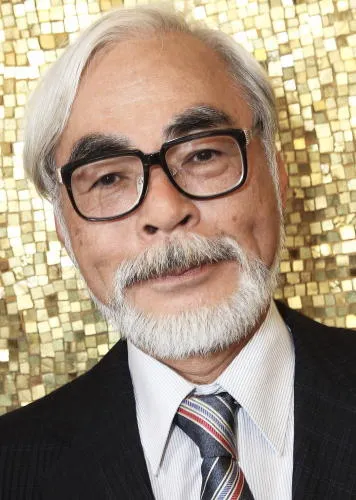
02 / Auteur
The animator becomes an auteur
Thomas Schulz photographed Hayao Miyazaki at the 2008 Venice Film Festival. The festival setting placed Japanese animation within an international institution of cinema and made an individual director available to the visual language of authorship and prestige. Recognition travelled through a person as well as through films, studios, distributors, critics, and audiences.
Close readingThe frame contains no animated character or fictional world. Miyazaki’s face, dark suit, striped tie, and the gold mosaic behind him fill the portrait. This visual economy makes animation respectable by mapping it onto the familiar figure of the film auteur. It also narrows a collaborative medium to one celebrated man, leaving the studio workforce and the wider histories of animation outside the frame.
Open source record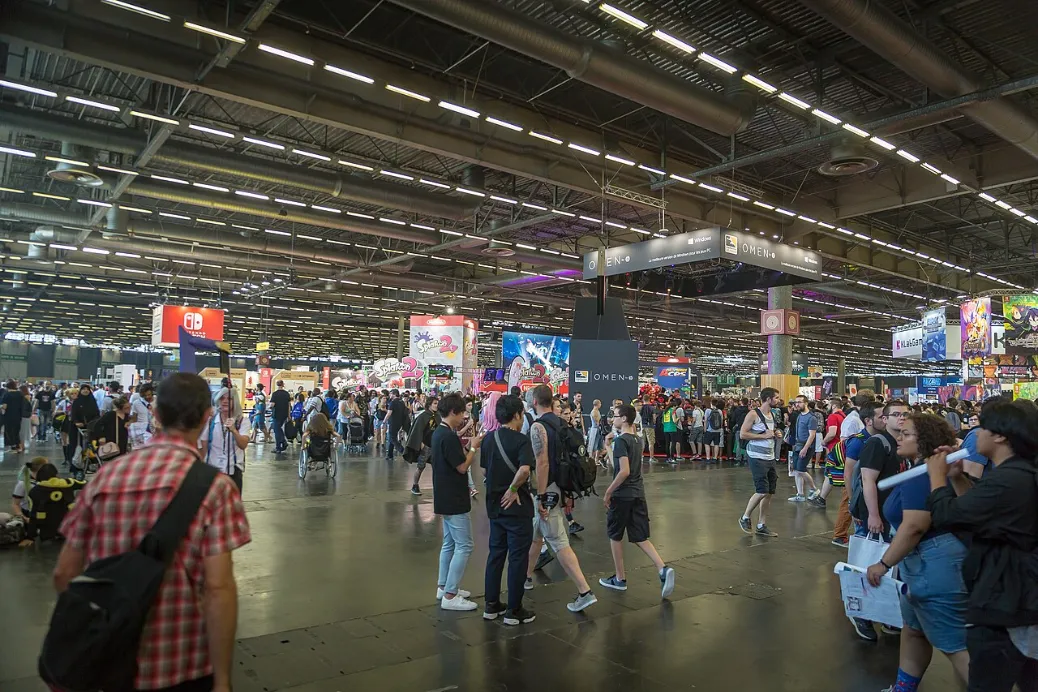
03 / Participation
A French convention remakes Japan as a participatory world
This 2018 photograph records Japan Expo near Paris. The event floor assembled game companies, illustrated franchises, vendors, performers, and visitors under one national label. What appeared there was not a miniature Japan transported intact. It was a temporary French media environment built by organisers, rights holders, exhibitors, workers, and attendees.
Close readingThe industrial ceiling and open concrete floor remain visible around a field of signs. A red Nintendo panel, game graphics, queues, bags, cameras, and clusters of visitors compete for attention. No single object defines the scene. “Japan” works instead as an organising category through which commercial display and fan practice become a shared place. Visitors do not merely receive the image; they walk through, wear, photograph, discuss, and alter it.
Open source record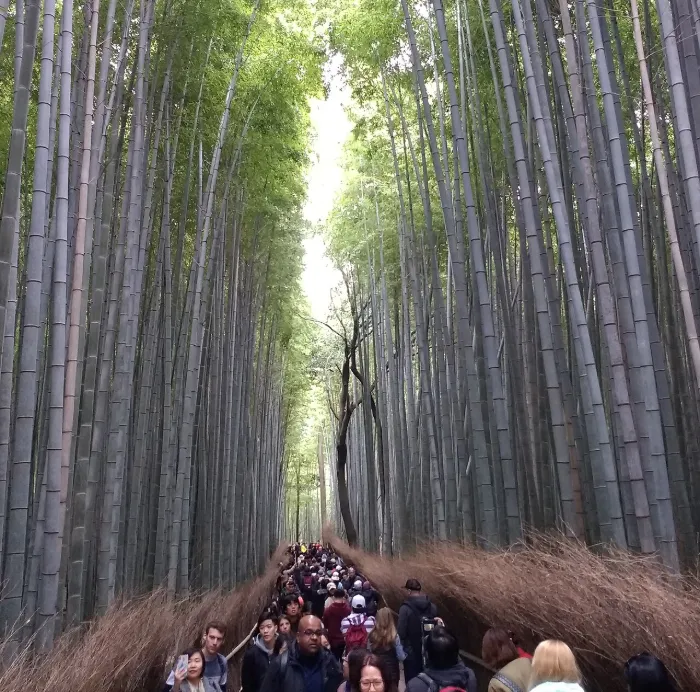
04 / Itinerary
The familiar image becomes an itinerary—and a crowd
Mx. Granger’s 2018 photograph shows tourists moving through the bamboo grove at Arashiyama in Kyoto. By this point, repeated images of Japan could organise physical travel as well as media consumption. The iconic view promised direct encounter, while guidebooks, screens, transport systems, tour businesses, and visitors helped reproduce the same destination.
Close readingTall bamboo trunks form a narrowing corridor toward a bright centre, the composition of an apparently timeless natural retreat. The lower third refuses that emptiness. A dense procession fills the path, and several visitors hold up phones or cameras. The photograph therefore contains both the desired view and the infrastructure of desire: people arrive to inhabit an image whose circulation has helped make solitude difficult.
Open source recordCounter-reading
Popularity is not consent, comprehension, or proof of policy success
Cultural familiarity can generate affection, business, community, and travel, but none of those effects belongs automatically to a nation-state. Platforms and festivals filter what circulates; fans translate and remake meanings; businesses localise categories; tourists change the places they seek. The 2019 strategy document is evidence that officials wanted to convert such attraction into presence and influence. It is not evidence that every encounter produced either.
- 01PlayStation’s reach depended on developers, publishers, localisation, retail, and play across many countries. A Japanese corporate platform carried transnational production rather than a sealed national message.
- 02The Miyazaki portrait records international recognition while privileging a single auteur. It cannot stand for every animator, studio, genre, labour condition, or audience.
- 03Japan Expo visitors are cultural producers as well as consumers. Their communities, performances, collecting practices, and criticism cannot be reduced to Japanese public diplomacy.
- 04The London takeaway photograph shows a local market category, not proof of Japanese ownership, culinary authenticity, or a direct transfer from Tokyo. Familiarity is also made by businesses abroad.
- 05Tourism does not simply confirm an attractive national image. Crowding, environmental pressure, local labour, and residents’ daily lives belong to the history of how an itinerary is consumed.
- 06Cool Japan Strategy is an aspirational and self-evaluating government document. Its language of global empathy and soft power names an ambition; popularity alone cannot establish political influence.
Evidence register
Sources in this chapter
- 01Japanese Sony PlayStation SCPH-1000 with controller and memory cardEvan-AmosConsole introduced December 3, 1994; photograph March 20, 2014A Japanese platform becomes an everyday interface rather than a distant national spectacle
- 02Hayao Miyazaki at the 2008 Venice Film FestivalThomas SchulzAugust 31, 2008International cinema prestige translates animation through the figure of the auteur
- 03Visitors and exhibitors at Japan Expo near ParisIsabelle and Stéphane GallayJuly 6, 2018A French convention assembles commercial display and fan participation under the category of Japan
- 04Tourists in the bamboo grove at Arashiyama, KyotoMx. GrangerNovember 14, 2018A familiar picturesque image becomes a physical itinerary whose popularity changes the view
- 05Wasabi sushi and bento takeaway at London Victoria stationEwan MunroDecember 1, 2011Japanese food becomes an ordinary commuter category through a business operating abroad
- 06Cool Japan Strategy, examples of foreign opinions and soft-power objectiveIntellectual Property Strategy Headquarters, Cabinet Office, Government of JapanSeptember 3, 2019The Japanese state formalises cultural attraction as a resource for global presence and influence